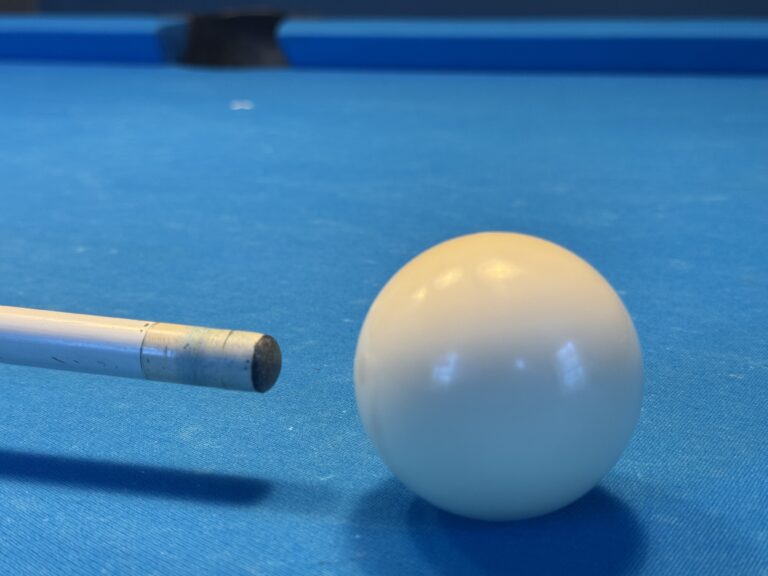


Why Many Players Wait Too Long to Replace Their Cue Tip
I’ll be honest—this is one of the most common (and most avoidable) problems I see around here: players waiting way too long to replace a worn cue tip.
And it’s not because people don’t care about their game. It’s usually because the decline happens slowly, the cue still technically “works,” and replacing a tip feels like something you’ll deal with later. By the time most players finally do something about it, they’ve been compensating for bad equipment far longer than they realize.
I see this constantly, both as a league player and as someone who works on cues every day.
The Slow Decline Most Players Don’t Notice
Cue tips almost never fail all at once. They flatten gradually, lose their ability to hold chalk, and provide less consistent feedback over time. Because the change is incremental, players adapt without realizing it.
Shots that used to feel automatic start requiring more effort. Spin becomes less reliable. Miscues creep in. Instead of identifying the tip as the issue, players chalk more, tweak their stroke, or blame the table.
Over time, those workarounds become normal.
APA League Play Makes the Pattern Worse
Around the South Shore, APA league play is a big part of the local pool scene, and it’s something I’m personally part of.
I’m a newly graduated Skill Level 5 8-ball shooter in APA, and like a lot of players around here, I’m shooting weekly—sometimes multiple nights a week—often with the same cue night after night.
Most nights when I’m not shooting league, I’m practicing at home. Between league play and regular practice, I spend a lot of time with the same cue in my hands, which means equipment issues show up fast.
That kind of consistent play accelerates tip wear, but it also makes players more likely to tolerate gradual decline. When you’re competing regularly and holding your own, it’s easy to assume your equipment is “fine,” even as performance quietly slips.
League players, in particular, tend to push tip replacement off until a session ends, playoffs wrap up, or something finally goes wrong.
Shoutout to my Weymouth, Stoughton, Brockton, and Rockland regulars—you know who you are.
Even Good Players Do This
This part surprises a lot of people.
I regularly see strong, high-level players shooting with worn tips. I’ve overheard more than one really good shooter say they’ve never replaced the tip on their cue—or that it’s been on there for years.
In my opinion, this is the perfect example of how skill can hide equipment problems for a long time. Good players learn to compensate. But even at a high level, worn tips still introduce inconsistency, limit control, and quietly hold performance back.
“It’s Still There” Thinking
One of the most common reasons players delay replacement is simple: the tip hasn’t fallen off.
As long as there’s still leather on the ferrule, it’s easy to convince yourself it’s good enough. Personally, I think this mindset does more harm than people realize. Performance drops long before a tip is completely gone.
Waiting until failure almost always means waiting too long.
Not Knowing Where to Go Is a Real Barrier
Another big reason players wait is access.
A lot of players don’t know where to get a cue tip replaced properly. Others assume it will be expensive, inconvenient, or that they’ll be without their cue for weeks. Some have had bad past experiences—uneven tips, damaged ferrules, rushed work—and decide it’s easier to just keep playing as-is.
When tip replacement feels uncertain or risky, it becomes something players put off, even when they know it’s affecting their game.
The “Why Didn’t I Do This Sooner?” Moment
One of the most common reactions after a long-overdue tip replacement is surprise.
Players are shocked by how much better the cue feels—and how long they were fighting unnecessary inconsistency. Shots feel cleaner. Spin comes back. Confidence improves. The fix turns out to be simpler than expected.
That moment almost always comes with the same thought: I should have done this sooner.
Final Thought
If you’ve been “making it work” for a while, you’re not alone. Many players—especially regular league shooters—wait longer than they should to replace a worn tip, not because they don’t care, but because the decline is easy to ignore.
Addressing it sooner keeps your cue consistent, your confidence intact, and your focus on the game instead of the equipment.
Shooting with the same cue every week?I’m happy to take a quick look at your cue tip.
It just takes a few minutes and can save you a season of fighting your equipment