

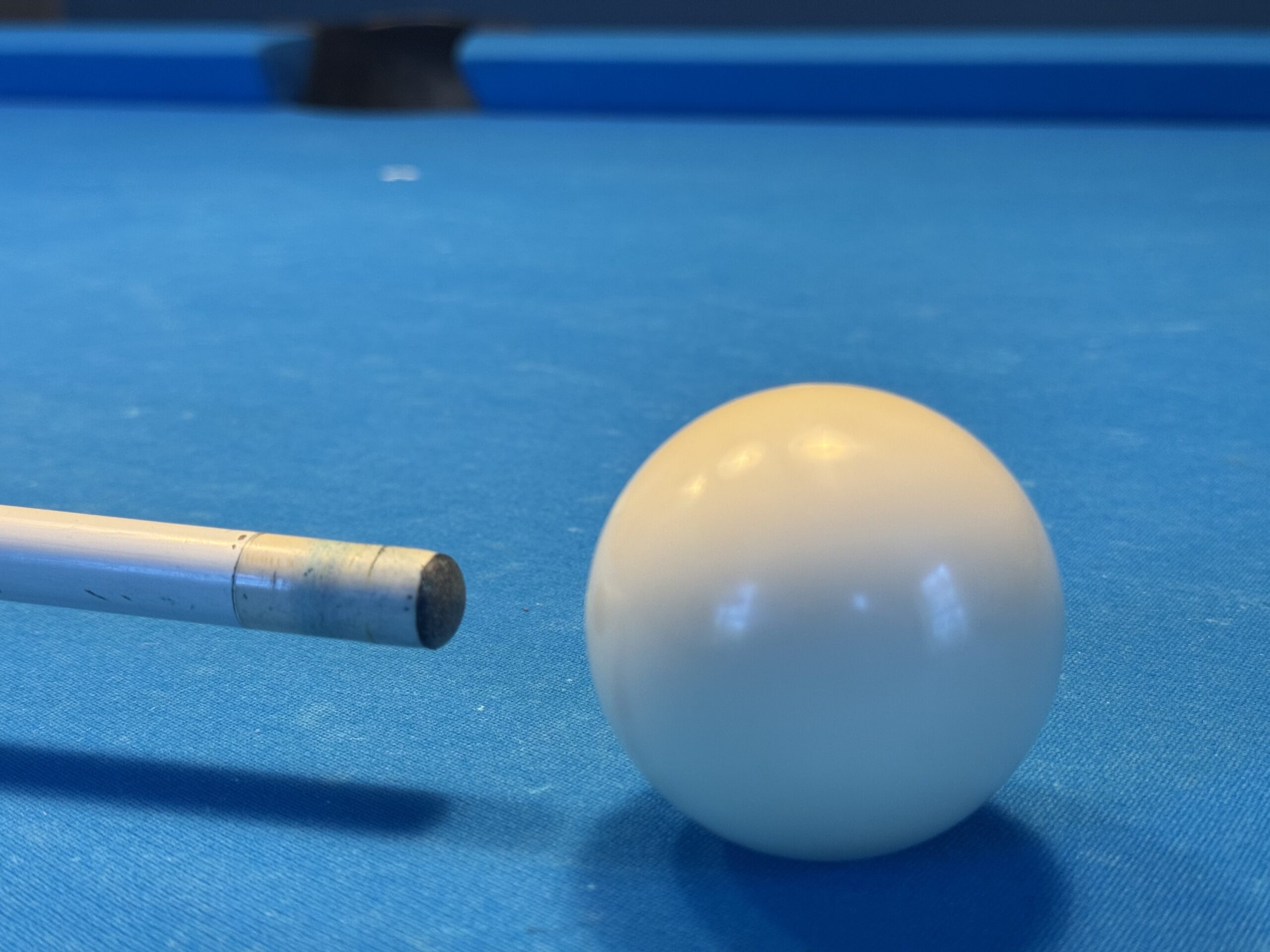
When to Replace Your Pool Cue Tip
A worn cue tip is one of the most common reasons players lose control, miscue more often, or feel like their game is suddenly “off.” The tricky part is that cue tips rarely fail all at once—they wear down gradually, which makes the problem easy to miss.
Here’s how to know when it’s time to replace your pool cue tip, what signs matter most, and why waiting too long can lead to bigger (and more expensive) problems.
Not sure if your cue tip is worn?If you play around the South Shore, South Shore Cues offers quick inspections and professional cue tip replacement in Hanover. Call or text us anytime.
Visual Signs Your Pool Cue Tip Is Worn
The tip is flat
A properly maintained tip should have a curved shape—usually a nickel or dime radius. When the tip becomes flat, it loses its ability to grip the cue ball, making spin and control harder.
Mushrooming around the edges
If the leather has spread wider than the ferrule, the tip is compressing and breaking down. This usually means replacement is near.
Cracks, chips, or missing leather
Any cracking or chunking is a red flag. Once the leather starts breaking apart, performance drops quickly and ferrule damage becomes a real risk.
A shiny or glazed surface
A glossy-looking tip doesn’t hold chalk well, which often leads to miscues even when you’re chalking properly.
Performance Issues You Can Feel While Playing
Frequent miscues
If you’re miscuing more often without changing your stroke, your tip may be too smooth, too hard, or too thin.
Loss of spin and cue ball control
When a tip can’t “bite” the cue ball, applying English becomes inconsistent or ineffective.
A harder or clickier hit
A sharp or hollow sound at contact usually means the leather is overly compacted or nearly worn out.
Inconsistent feedback
If some shots feel fine and others don’t, the tip may be wearing unevenly or breaking down internally.
Many Players Wait Too Long to Replace Their Tip
One of the most common things we see—across league players, APA shooters, and casual amateurs—is waiting far longer than they should to replace a worn cue tip.
Often it’s because the tip is still technically “there.” Other times it’s habit, superstition, or not wanting to deal with the hassle. Many players chalk more, tweak their stroke, or blame the table instead of addressing the real issue.
What makes this worse is how easy it is to adapt. Control fades gradually, miscues become normal, and expectations reset lower than they should be. By the time most players finally replace the tip, they’re surprised by how much better the cue feels.
A big part of the problem is simply access. Many players aren’t sure where to go for a proper tip replacement, assume it will be inconvenient, or have had poor experiences in the past. As a result, tip replacement becomes something they put off—even when they know it’s affecting their game.
How Thin Is Too Thin for a Cue Tip?
As a general rule, once a tip reaches about 1 mm of thickness, it should be replaced.
- Control drops quickly
- The tip becomes unstable
- The ferrule is exposed to direct impact
Replacing a tip early is far less expensive than repairing or replacing a damaged ferrule.
How Long Pool Cue Tips Typically Last
- Casual players (1–2 nights per week): 6–12 months
- League or frequent players: 3–6 months
- House cues and bar sticks: 1–3 months
Usage, chalk quality, storage conditions, and tip material all affect lifespan.
Why Tip Quality Matters (Including Kamui Tips)
Not all cue tips wear the same way. Higher-quality tips tend to hold their shape longer, retain chalk better, and deliver more consistent feedback.
Premium tips like Kamui are popular with individual players because they balance feel, control, and durability.
While no tip lasts forever, better materials usually lead to more predictable performance over time.
The Right Tool for the Right Job (Player Cues vs. House Cues)
Not every cue—or use case—needs the same type of tip.
For individual players, feel, consistency, and control matter most. This is where premium tips like Kamui make sense.
For bars, house cues, and high-use environments, durability and cost-efficiency matter more than fine touch. Tips like Triangle or Le Pro are often the right tool for the job in those settings, especially when cues see constant use and minimal maintenance.
Choosing the correct tip based on how a cue is actually used helps extend its life and keeps performance expectations realistic.
Bars and businesses with multiple tables need more than one-off repairs.
South Shore Cues offers ongoing cue maintenance options designed for high-use environments.
Replace vs. Reshape: When Maintenance Is Enough
Sometimes a tip doesn’t need replacing—it just needs maintenance.
- The tip still has adequate thickness
- The leather is intact
- The issue is mainly shape or glazing
If the tip is thin, cracked, or inconsistent, replacement is the better option.
A Quick Local Note
If you play regularly around the South Shore—whether at a bar, league night, or at home—it’s worth having your cue tip checked before it becomes a problem. A quick inspection can prevent miscues, frustration, and unnecessary ferrule repairs.
Final takeaway: If your cue feels inconsistent, won’t hold chalk, or has lost its shape,
your tip is probably telling you it’s time.