
Why Managed Pool Cue and Table Service Makes Sense for Operators
Most operators care about the condition of the pool tables and equipment they manage. Good playing conditions matter to customers, league organizers, and staff alike. The challenge is that cue and table maintenance often has to compete with many other operational priorities, and over time, responsibility for that upkeep is handled informally.
As table usage increases or expectations rise, informal maintenance approaches can become harder to sustain. This has led some operators to rethink how cue and table upkeep is managed and to explore more structured, proactive service models.
Cue Maintenance Is Often Informal Until Problems Surface
In many bars, pool rooms, breweries, and recreational locations, cue maintenance is handled on an as-needed basis. Staff notice when a tip is worn, a shaft is warped, or a cue becomes unplayable, and action is taken at that point.
This approach is practical and often effective, especially in smaller locations or accounts with lighter table use. It relies on observation and judgment rather than a fixed schedule or documented process.
Cue Wear and Damage Follow Predictable Patterns
While cue issues may feel random in the moment, most wear and damage follows predictable patterns. Tips wear down based on usage. Shafts respond to environmental conditions. The same cues tend to see the most play and, as a result, experience the most wear.
Recognizing these patterns makes it possible to address issues before they affect play quality rather than after complaints surface.
Where In-House Cue Maintenance Starts to Break Down
Many operators already rotate cues or handle basic maintenance internally. This can work well when responsibilities are clear and time is available.
As operators grow busier, add tables, host more organized play, or manage multiple locations, consistency becomes harder to maintain. Maintenance tasks can slip, standards can vary, and cue quality may differ from table to table—not because people aren’t paying attention, but because the system depends heavily on individuals rather than process.
League Play Raises the Bar for Table Conditions
In locations that host league play, expectations around table conditions tend to be higher. Clean balls, properly maintained cloth, and consistent playing surfaces are closely scrutinized and directly affect play quality.
Because of this, some operators place additional emphasis on table-focused maintenance, either alongside cue service or as a standalone effort for league-designated tables. In these environments, table care often has a greater impact on player satisfaction than cue repair alone.
What a Managed Service Actually Changes
A managed cue and table service introduces structure where informal systems rely on availability and memory. Scheduled inspections, routine rotation, and standardized components help maintain consistent conditions over time.
The focus shifts from reacting to individual problems to maintaining predictable play quality as a matter of routine.
Managed Services Are Already Common in Operator-Run Locations
Most pool table operators already manage equipment through structured, recurring service models. Beverage systems, amusement machines, and pool tables themselves are routinely inspected, maintained, and serviced on a schedule rather than repaired only when something breaks.
Applying the same approach to cues and table accessories is a natural extension of how operators already think about consistency, reliability, and route-based service across the locations they manage.
Who Benefits Most from Managed Cue and Table Service
Bars and pubs with steady table use, breweries and VFWs, pool rooms, entertainment venues, and pool table operators often benefit most from structured, route-based service—particularly where consistency, reputation, and player experience matter.
Maintenance vs. Repair Is a Structural Choice
Cue and table issues are not random. Different operators simply choose different ways to manage them. Informal systems prioritize flexibility, while managed systems prioritize consistency. The right approach depends on scale, usage, and expectations.
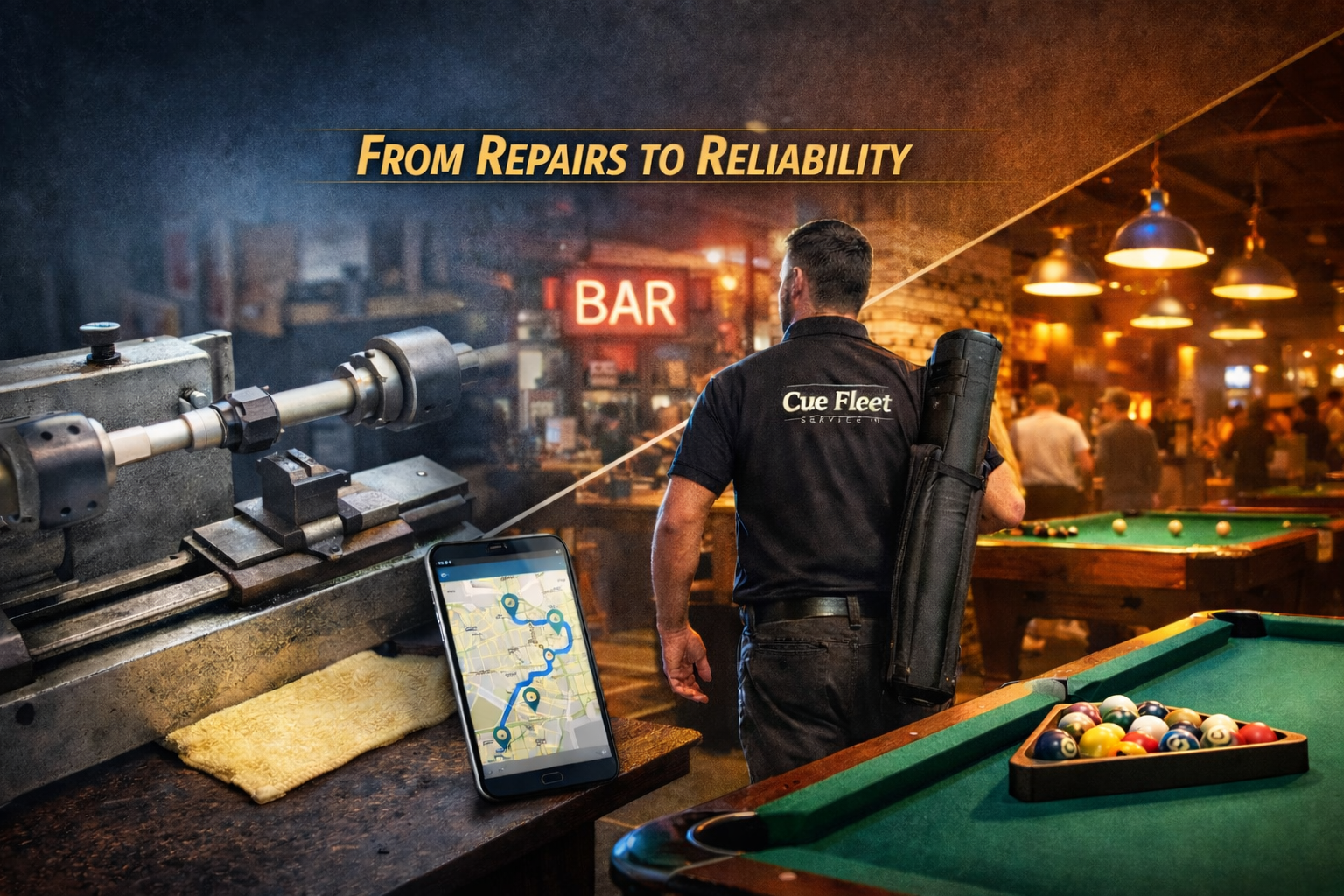
Over time, cue and table maintenance stops being about individual repairs and starts being about consistency. As operators grow busier, host more organized play, or manage multiple tables or locations, informal approaches can become harder to sustain. A managed service model doesn’t replace attention or care—it formalizes it, making equipment condition predictable rather than reactive. For many operators, that shift is less about changing what gets maintained and more about changing how responsibility is handled.
Learn how this approach is applied in practice with Cue Fleet Service™ →